Most Hyundai and Kia part numbers follow a 5+5 pattern, such as 58101-3SA25. The first five digits usually name the part type. The last five characters usually point to the model and the version. Always check the full number against the VIN before you order.
A Hyundai or Kia part number looks like a serial code. It is closer to a short address. Once you know where each block points, you can spot a wrong part before it crosses an ocean.
This guide uses real numbers from the shop catalogue to show the pattern. It also shows where the pattern stops being reliable.
What does the 5+5 pattern mean?
Hyundai Motor Group numbers are commonly written as five digits, a hyphen, then five more characters. A typical example is 58101-2WA00. That is ten characters in two blocks.
The first block identifies the component category. Across Hyundai, Kia and Genesis, 58101 is a front brake pad kit. Another published example: 27301 is an ignition coil and 95670 is a wheel speed sensor.
The second block carries platform and variant information. In most cases it is where the model and the version of the part are encoded. It is also where most buying mistakes happen.
Format alone does not prove fitment. A number that looks right can still belong to a different engine, market or trim. Treat the number as a strong lead, then confirm it.
Reading the first block: the part type
The first five digits answer one question: what is this part? Parts that do the same job usually share them, even on different cars.
You can see this in the catalogue. The front brake pad sets in the table below all start with 58101, whether they are for a Sonata or a Tucson. Diesel fuel filter assemblies for the Tucson and the Kia Sportage share the 31970 prefix.
- 58101 appears on front brake pad sets for many models.
- 31970 appears on diesel fuel filter assemblies.
- 87610 and 87620 appear on driver side and passenger side mirrors.
Learn the prefixes you buy most often instead of trying to memorise a full chart. A short list of five or six prefixes covers most repeat orders.
Reading the second block: model and version
The last five characters usually tell you which vehicle the part was made for, plus a version. Think of the first block as the part name and the second as the fine print.
Here is the same prefix with different endings, taken from product listings in the shop:
| Part number | Listed as | What it shows |
|---|---|---|
| 58101-3SA25 | Sonata (YF) front brake pad set | Same prefix, one variant |
| 58101-3SA26 | Sonata (YF) front brake pad set | Same prefix, neighbouring variant |
| 58101-D3A11 | Tucson (TL) / Sportage (QL) front brake pad set | One number listed for two models |
| 87610-3S000FHM | Sonata YF mirror, driver side (left) | Prefix changes with the side |
| 87620-3S000FHM | Sonata YF mirror, passenger side (right) | Same ending, different prefix |
| 31970-D3830 | Tucson (TL) 1.6 diesel fuel filter assembly | Engine size changes the ending |
| 31970-D3900 | Tucson (TL) 2.0 / 1.7 diesel fuel filter assembly | Same prefix, other engines |
Three lessons sit in that table. Neighbouring endings such as 3SA25 and 3SA26 are separate variants, not typos. Left and right parts can differ in the first block instead of the second. And the engine can change the ending even when the car stays the same.
Do not swap one character and hope. A number one step away from yours is a different part until a catalogue says otherwise.
Why do the same model letters mean different things?
Do not read model letters in isolation. Hyundai model codes are alphanumeric, and the same code can appear on different vehicles. For example, NX4 is used on both the Tucson Hybrid and the Santa Cruz.
So a code like D3 or 3S can help you recognise a family of numbers. It cannot replace the vehicle details. The model name, body code, engine and production year all matter.
What are the extra letters at the end?
Some numbers carry more than ten characters. Examples are 87610-3S000FHM and 87620-2B520EB. The extra letters are part of the number, so keep them when you search or order.
They may point to a different finish, trim or option level. Do not assume. If you only have the first ten characters, say so in your request.
Why does the dash disappear?
Some catalogues, spreadsheets and SKU fields drop the dash. The shop stores 58101-D3A11 as the SKU 58101D3A11. In writing they look different, but they are one number.
When you compare quotes, strip the dashes and spaces from both. Then compare character by character. Confusing the digit 0 with the letter O is a classic slip on worn stickers and photocopied lists.
How to confirm a number before you order
Start from the vehicle, not the part. A 17-character VIN retrieves factory build records in dealer catalogues, covering model, engine, trim and market. That is the strongest way to narrow the number down.
- Copy the VIN from the registration or the vehicle plate.
- Note the model, body code, engine size and production year.
- Find the number on the old part, or in the catalogue diagram for that system.
- Write it with every letter, including any at the end.
- Compare it with the listing for your vehicle.
A number can also be replaced by a newer one over time. If you have both an old and a new number for the same part, mention both.
Parts that show the pattern
These listings illustrate the patterns above. Open any of them to see the full number and the vehicle it is listed for.
Parts mentioned in this guide
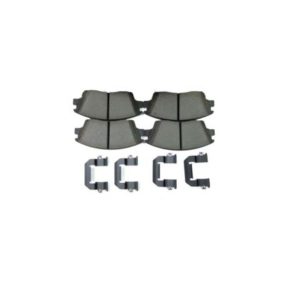
- Tucson / Sportage pads
Hyundai Tucson (TL) / Kia Sportage (QL) Front Brake Pad Set 58101-D3A11
- 58101D3A11
- Hyundai
- New
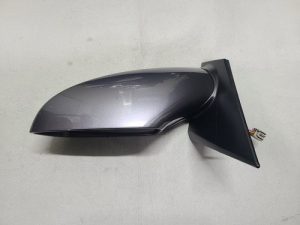
- Mirror, driver side
Hyundai Sonata YF Side Mirror, Driver Side (Left), Electric Folding 87610-3S000FHM
- 876103S000FHM
- Hyundai
- Used
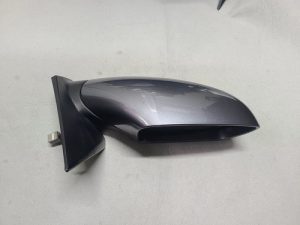
- Mirror, passenger side
Hyundai Sonata YF Side Mirror, Passenger Side (Right), Electric Folding 87620-3S000FHM
- 876203S000FHM
- Hyundai
- Used
Where to find the number on a part
Check the part itself first. Look for a stamped or printed number on the body, a sticker, or the box. If the number is worn, photograph it in good light from several angles.
Be careful with packaging alone, because a box can be reused. Where possible, match the number on the part to the number in your request.
Used parts and part numbers
Used parts are quote-only. Send the number, the VIN and a photo of the old part through the quote request form. A photo of the label often settles doubts fastest.
Find your vehicle
If you do not have a number yet, browse by model. The vehicle hubs group parts by car, including Hyundai Sonata, Hyundai Tucson and Kia Sportage. For the buying steps, read how ordering works.
Freight is shown at checkout for new parts, or confirmed before dispatch. Import duties and taxes are paid by the buyer. Stuck on a number that does not match any listing? Contact us with the VIN and a photo, and include every character you can read.
Frequently asked questions
Is the part number the same as the OEM number?
For the 5+5 numbers in this guide, yes. They are the manufacturer’s own references. Some listings use another style, such as the brake pad code DK9936A, which is not the 5+5 pattern.
Can I use a number from a different Hyundai or Kia model?
Sometimes one number is listed for two models, as with 58101-D3A11. That is the exception, not the rule. Confirm it for your exact vehicle.
Do Hyundai and Kia use the same system?
The two brands use the same style of number, and the shared 58101 and 31970 prefixes show it. Always check which brand the listing names.
What if my number has no dash?
Treat it the same way. Split it after the fifth character and compare it with the listing.
What should I send with a quote request?
Send the full number, the VIN, the model and year, and a photo of the old part. More detail means fewer wrong guesses.
Read a Hyundai or Kia number as part type first, then model and version. The 5+5 pattern is a guide, so confirm every number with the VIN and keep any trailing letters.