“Genuine” normally means the part comes through the carmaker’s own parts channel. For Hyundai and Kia, that channel is Hyundai Mobis. “OEM” is looser and can mean the carmaker or its suppliers. Aftermarket parts come from other companies and vary by maker, so judge the maker and part number, not the label.
Why the labels confuse buyers
Five words get mixed up on almost every parts listing: genuine, OEM, aftermarket, remanufactured and used. Sellers use them loosely. Buyers in different countries read them differently.
This guide gives you one working definition for each. It also shows which type makes sense for brake pads, window motors, control units and suspension links on Korean cars.
What “genuine” means for Hyundai and Kia
A genuine part is sold through the carmaker’s own parts channel, in the carmaker’s packaging. For Hyundai and Kia, Hyundai Motor Group describes Hyundai Mobis as the exclusive supplier of after-sales parts for both brands.
Scale is part of the story. The same Hyundai Motor Group article says one Mobis logistics center manages 175,000 different after-sales parts for 152 Hyundai and Kia models. Korean cars have deep catalogues, and genuine part numbers are the reference everyone else follows.
GM Korea, SsangYong and Renault Korea have their own parts channels. The idea is the same: genuine means the carmaker’s own supply line.
What “OEM” means, and why it is slippery
OEM stands for original equipment manufacturer. It can describe the automaker, or a component supplier that makes parts for the automaker. So an OEM part may or may not carry the carmaker’s logo.
A UK workshop-manual publisher notes that many parts sold by main dealers are produced by outside suppliers and often rebranded by the manufacturer. The same factory may therefore fill a carmaker box and a plain maker box.
Usage differs between sources and countries. Ask the seller to say exactly who made the part.
Ask one question before you buy: “Who made this part, and does that maker also supply the carmaker?” A clear answer matters more than the word OEM on the listing.
What “aftermarket” means
An aftermarket part is made by a company other than the original equipment manufacturer. It is sold as a replacement after the car is on the road.
Aftermarket does not automatically mean low quality. AAA notes that many aftermarket makers also produce original-equipment parts, and for some the difference is mainly branding and cost.
The real risk sits at the bottom of the market. AAA warns that for off-brand, no-name and counterfeit parts, there is no way to judge quality.
Remanufactured, refurbished and used parts
These three are not the same thing, even if a listing treats them alike.
- Remanufactured (or rebuilt): the part is completely disassembled. Each component is restored to factory specifications or replaced with a new one.
- Refurbished or reconditioned: the part is repaired only as far as needed to make it work.
- Used: the part is taken from a vehicle that is no longer in service, often after a collision.
Sellers do not always use these words in the same way. Ask what was replaced and what was only cleaned.
Mechanical used parts that wear in normal operation, such as motors, switches and pedals, can be expected to last a shorter time than new or rebuilt ones. Treat a used part as a calculated choice, not one to forget about after fitting.
Side-by-side comparison
| Type | Who makes it | Main strength | Main risk |
|---|---|---|---|
| Genuine | Carmaker’s own parts channel (Hyundai Mobis for Hyundai and Kia) | Reference part number and carmaker packaging | Fewer sourcing options for old models |
| OEM | The carmaker or a supplier to it | Built for the original application | Term is used loosely; ask who made it |
| Aftermarket | A company outside the original supply chain | Wide choice of makers | Quality varies by maker |
| Remanufactured | A rebuilder, working from used parts | Components restored or replaced when done properly | Definitions differ between sellers |
| Used | Taken from a donor vehicle | May suit parts that are hard to find new | Remaining life is unknown |
Which type suits which part?
There is no single best type. The right choice depends on what the part does and how hard it is to replace.
Safety parts: brake pads and similar
Brake pads decide how the car stops. Buy from a maker you can name, and avoid anything unbranded. Hyundai Mobis itself says counterfeit brake pads can cause uneven braking and brake fade, and advises checking the label and security features on the pack.
Wear parts: stabilizer links, bushings, filters
These wear out on a schedule. A named independent maker can be a sensible choice, provided the part number and fitment list match your car.
Electronics: ECUs and control modules
Control units are matched to the engine and market. Match the full part number and the printed codes, and send a photo of the old unit’s label with your quote request.
Comfort parts: window motors and switches
Genuine is the safest match for trim colour and connector shape. A used part can work, but see the warning above about remaining life.
Whatever the type, start from your car’s original part number, not from the listing title. Compare it with the number on the product page, and have the VIN or a photo of the old part ready if you are unsure.
Real examples from the catalogue
Product titles on partshpere carry the label in the name, so you can read it before you open the page.
- A genuine window regulator motor for the Hyundai Tucson shows the carmaker-reference route.
- A Yulim stabilizer link for the Hyundai Sonata shows a named maker brand.
- A Hi-Q front brake pad set for the GM Winstorm and Captiva shows another named maker, on a safety part.
- A used ECU for the Hyundai Sonata EF shows the used route, which is quote-only.
Examples from the catalogue

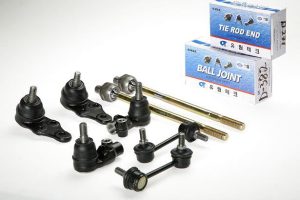

Naming a maker here says nothing about whether it supplies any carmaker. Use the part number and fitment list on each page to confirm the match for your car.
How to check a part before you order
- Find the original part number on the old part, or in the workshop manual.
- Compare it with the number and the vehicle list on the product page.
- Read the title for the label: genuine, a maker name, or used.
- Look at the photos and packaging details for labels and security marks.
- If anything is unclear, send the VIN and a photo through the quote form.
You can browse by model on the vehicles page, for example the Sonata, Tucson or Winstorm and Captiva hubs. The shop lists new parts with checkout, and used parts are handled by quote.
Not sure how an export order runs? How ordering works covers the steps. Questions go through the contact page. Import duties and local taxes are the buyer’s responsibility, so check your country’s rules before you order.
Genuine means the carmaker’s own channel, OEM is a looser term that can include suppliers, aftermarket depends on the maker, and used and remanufactured depend on what was done to the part. Match the part number first, then choose the type by how critical the part is.